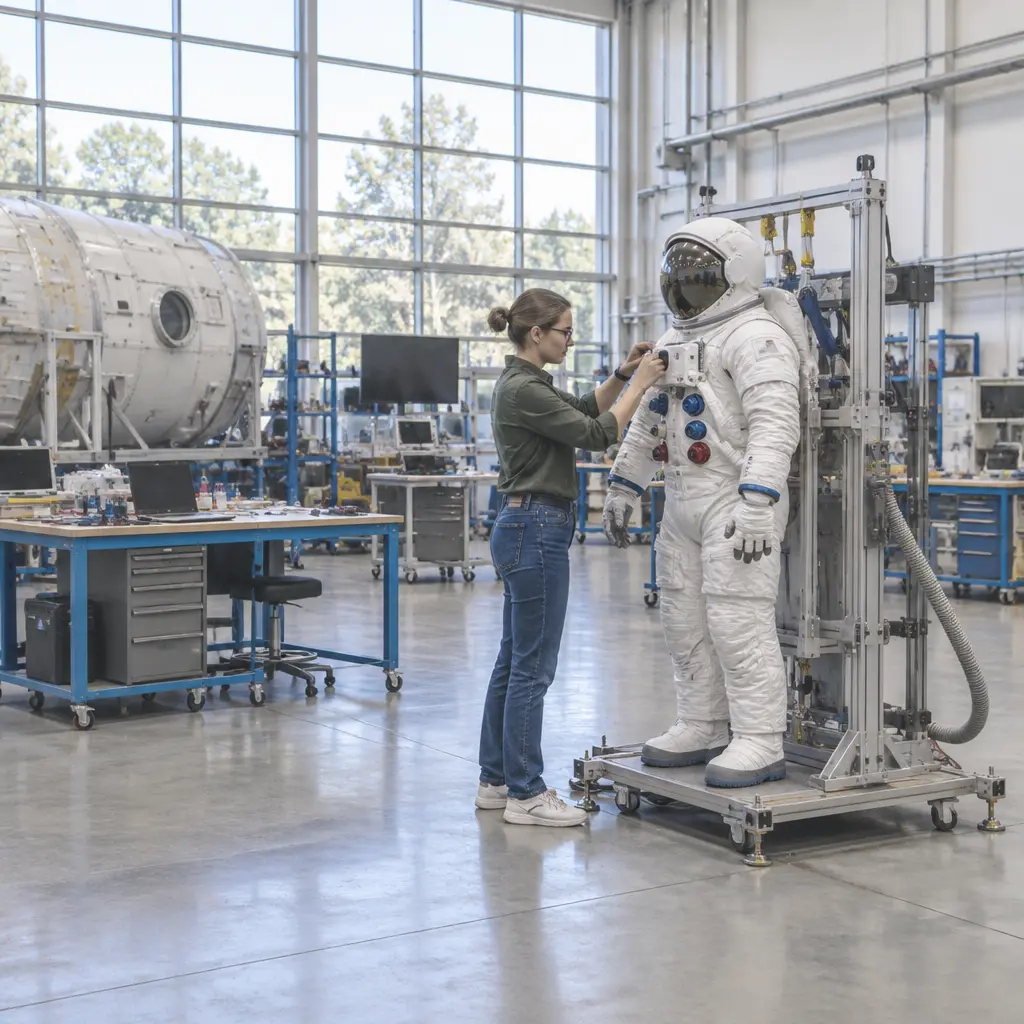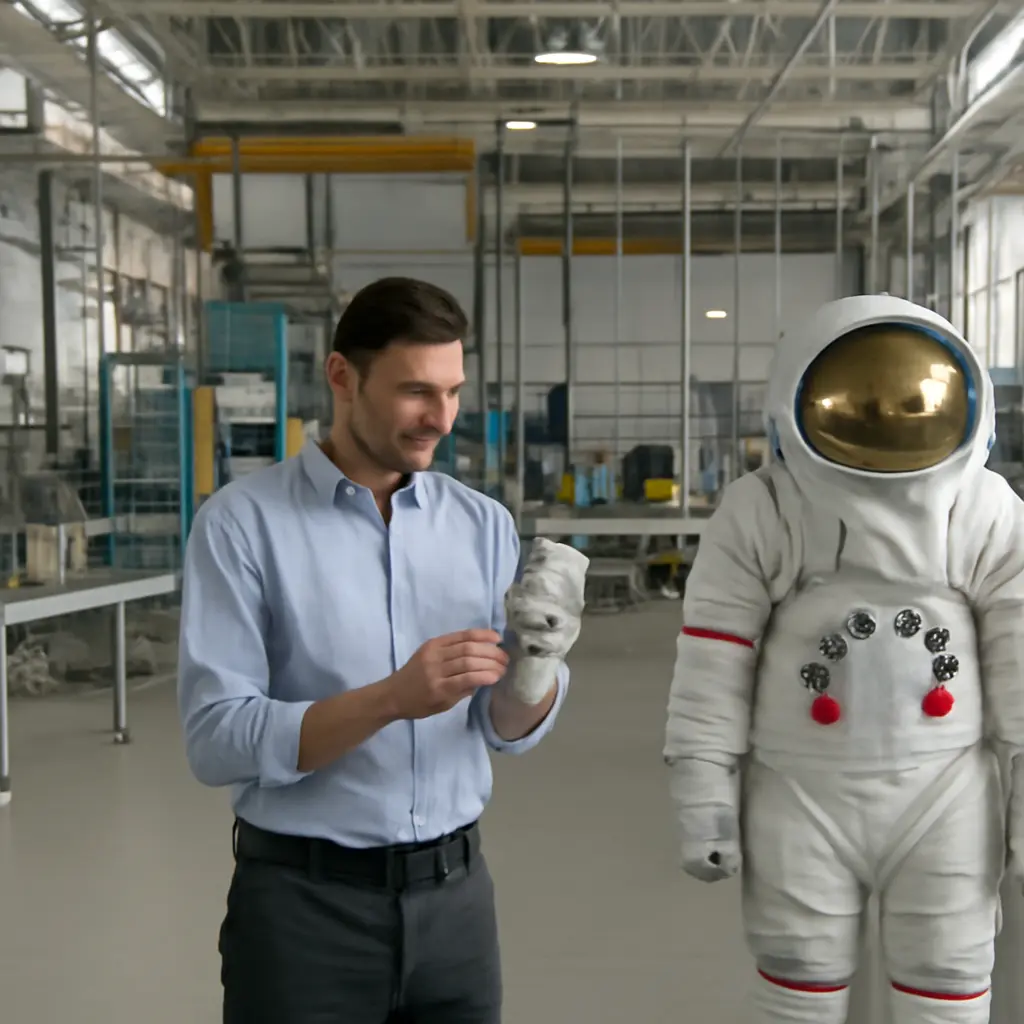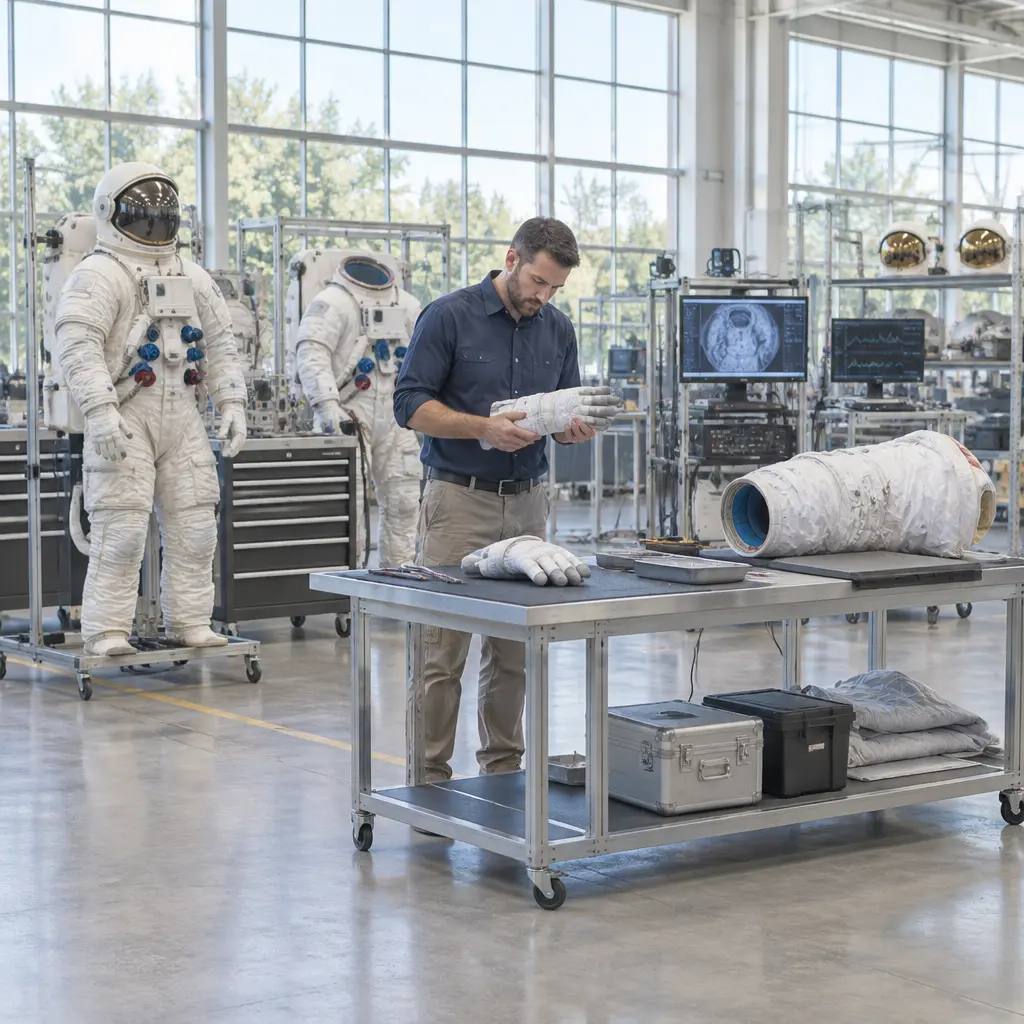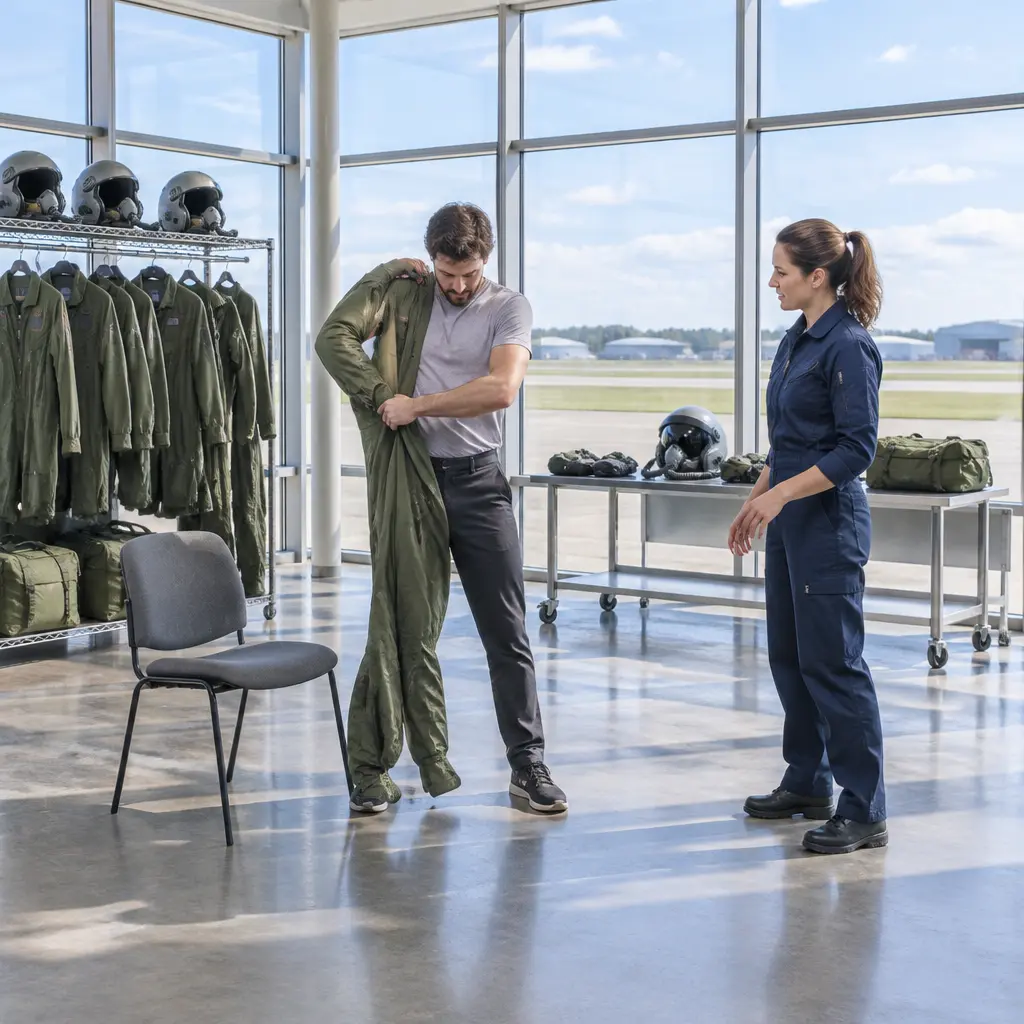
Space-tourism flight suits and cabin procedures are the clothing, equipment, and instructions that help passengers travel safely without professional astronaut training. Making them accessible means designing gear that fits a diverse range of bodies and can be understood and donned with limited assistance. That matters as commercial human spaceflight expands: the U.S. Federal Aviation Administration reported 17 licensed commercial human-spaceflight operations in fiscal year 2023, while emphasizing that passenger safety training and informed consent remain central to the industry. Clearer, more inclusive donning procedures can reduce avoidable confusion, support mobility and dignity, and help operators prepare passengers for launch and landing without implying that a simplified process replaces safety-critical training.
Space-tourism accessibility defines inclusive passenger preparation
Space-tourism accessibility is the practical ability of people with varied physical, sensory, cognitive, and communication needs to take part in a commercial spaceflight experience. The World Health Organization describes disability as arising from the interaction between a person’s health condition and personal and environmental factors. Applied to space tourism, that perspective shifts attention from a passenger’s body alone to the suit, cabin layout, assistance, instructions, and emergency procedures around them.
There is no single international accessibility standard specifically governing passenger suit donning for commercial space tourism. Requirements depend on the vehicle, mission profile, operator procedures, and applicable aviation or spaceflight rules. The FAA’s commercial human-spaceflight framework requires operators to inform participants about risks and obtain written informed consent; it does not certify that a vehicle is safe for carrying spaceflight participants. Accessibility therefore has to be built into operator design and training rather than assumed from regulatory approval.
Accessibility is a systems property
Accessible preparation involves more than making a suit easier to put on. It includes sizing and fit, reach and dexterity demands, clear language, assistance options, seating and transfer arrangements, time to practice, and the ability to communicate discomfort. A passenger may manage a garment independently but need help with a closure, a mobility aid, or understanding a sequence under stress. Operators should assess the complete task rather than treat an individual feature as proof of accessibility.
Passenger safety training is not professional astronaut training
Commercial passengers do not ordinarily undergo the years of selection and mission preparation associated with career astronauts. They still need mission-specific orientation: how to wear required equipment, follow crew instructions, use restraints, and report problems. In its commercial-spaceflight guidance, the FAA distinguishes operator responsibilities from government certification of passenger vehicles. Simplification should make essential actions easier to learn and verify—not remove necessary checks or suggest that a passenger can safely improvise.
Donning procedures shape space-tourism accessibility
A donning procedure is the ordered process for putting on, adjusting, checking, and securing clothing or protective equipment. In commercial spaceflight, the required equipment varies: a suborbital cabin suit is not automatically equivalent to a pressure suit, and a garment worn for comfort or cabin operations should not be described as life-support equipment unless it performs that function. The National Academies’ human-systems research emphasizes designing aerospace systems around human capabilities and limitations; that principle supports procedures that are observable, teachable, and compatible with the intended user population.
A useful procedure separates the task into manageable steps: identify the correct suit and size, prepare the wearer and garment, put it on in a stable posture, secure closures, check fit and function, and confirm readiness with a trained crew member. The precise sequence must be validated for the actual equipment and vehicle. The following categories describe design approaches, not universal flight instructions.
Fit and sizing reduce avoidable barriers
Fit is the relationship between a garment’s dimensions and the wearer’s body, including movement, pressure points, and compatibility with seated restraints. A passenger suit should be selected and assessed while the wearer adopts relevant postures, especially seated positioning. NASA’s anthropometry and human-factors work documents the importance of body measurements for designing crew interfaces; commercial operators can apply the same design logic by testing a broad range of body sizes and mobility profiles. Publicly available sources do not establish one universal size range for commercial passenger suits, so operators should publish their own fit criteria and communicate limitations before booking.
Easy-to-operate closures and orientation cues support independence
Closure accessibility concerns the force, reach, grip, and precision needed to fasten a garment correctly. Large, high-contrast labels, tactile markers, asymmetrical shaping, and clearly differentiated left-right components can reduce orientation errors. These are human-factors design strategies, not evidence that a particular closure is flight-qualified. Any change to a flight garment must preserve its tested performance, compatibility, and inspection requirements.
Seated and assisted donning protects dignity
Seated donning is the process of putting on equipment while supported in a chair or other stable position. It can reduce balance demands and make assistance easier to provide. Procedures should explain what help is available, who may provide it, how consent is obtained, and how privacy is maintained. The U.S. Department of Transportation’s disability guidance for air travel offers a relevant accessibility principle: assistance should be coordinated with the traveler and should not be treated as a substitute for respectful communication. Spaceflight has distinct hazards and rules, so aviation practice is a reference point rather than a direct regulatory template.
Verification makes simplified steps dependable
Verification is a brief confirmation that required items are correctly worn and that the passenger understands the next action. A crew member can use a standardized checklist, ask the passenger to identify key closures, and invite them to report pressure, heat, restricted movement, or discomfort. Checklists are especially useful when several passengers are preparing at once, but they should be tested for clarity and workload in realistic conditions. A simplified sequence is successful only if passengers and crew can reliably detect omissions.
Inclusive instruction improves passenger readiness
Instruction translates a written procedure into a practiced skill. The Federal Aviation Administration’s human-factors guidance for aviation recognizes that communication, workload, and training affect operational performance. For space-tourism passengers, the same broad lesson supports short, consistent instruction delivered before the flight and reinforced during in-person preparation.
Use plain language and multiple formats
Plain-language instruction uses familiar words, one action per step, and explicit descriptions of what “secure” or “ready” means. Diagrams, captioned video, spoken demonstration, and hands-on practice provide alternatives for passengers who learn or communicate differently. Materials should be available in accessible formats and in languages passengers can understand. The World Wide Web Consortium’s Web Content Accessibility Guidelines provide established principles for digital content, including perceivability, operability, understandability, and robustness; those principles can inform preflight materials, although they do not certify a physical training process.
Practice should include realistic conditions
A rehearsal lets passengers try the actual or representative garment, ask questions, and experience the sequence before flight day. Operators can test instructions with users who have different heights, dexterity, hearing, vision, and mobility needs, then revise steps that cause repeated errors. NASA’s human-centered design approach uses evaluation and iteration to reveal mismatches between people and systems. Public research does not yet provide a robust, cross-industry statistic for how many minutes accessible suit donning should take; timings should therefore be established through equipment-specific trials rather than invented as a universal benchmark.
Communication and consent are part of the procedure
An accessible process tells passengers how to ask for help, pause a fitting, or report a problem without embarrassment. Staff should explain each hands-on action before assisting and obtain permission, particularly when adjusting garments near the body. This approach supports informed choice and allows crew to identify fit or comfort issues early. A passenger’s request for assistance should not be interpreted as inability to participate; the relevant question is whether the operational requirements can be met safely with reasonable, clearly planned support.
Commercial spaceflight examples inform—but do not settle—accessibility
Current commercial missions show that passenger preparation is already an operational concern, but publicly available details about suit-donning procedures, accessibility testing, and passenger outcomes are limited. Operators should distinguish verified public facts from marketing descriptions and avoid treating a successful flight as evidence that a process works for every body or disability.
Suborbital and orbital missions have different equipment needs
Suborbital flights and orbital missions differ in duration, vehicle design, cabin environment, and operational demands. NASA’s Commercial Crew Program, for example, involves spacecraft and crew systems designed for professional missions to the International Space Station, while private orbital missions carry different passenger and mission arrangements. These examples demonstrate why donning procedures must be vehicle-specific: equipment, restraint interfaces, and crew roles cannot be assumed interchangeable across operators.
The FAA’s activity figures show a growing operational context
The FAA reported 17 licensed commercial human-spaceflight operations in fiscal year 2023. This figure counts operations, not individual tourists, and should not be read as a measure of accessibility or market size. It nevertheless illustrates why repeatable passenger preparation and clear procedures are becoming practical concerns for an expanding commercial sector.
A responsible evidence gap remains
There is not yet a widely published, independent dataset comparing passenger donning times, error rates, or accessibility outcomes across commercial spaceflight operators. That gap makes transparent reporting valuable. Operators and researchers could publish de-identified measures such as completion without intervention, requests for assistance, fit-related changes, comprehension checks, and procedural revisions—while protecting passenger privacy and avoiding claims that a small sample proves universal suitability.
A practical framework for accessible donning
Operators can make preparation more inclusive through a design-and-test cycle grounded in the actual vehicle and suit. The following framework is a planning aid, not a substitute for engineering approval, medical assessment, or flight-specific procedures.
- Map each donning step, identifying required reach, grip, balance, comprehension, and assistance.
- Test garment fit and closure operation with a diverse participant group, including users with mobility, sensory, and dexterity differences.
- Offer stable seated preparation and clearly defined, consent-based assistance where operationally feasible.
- Provide concise, accessible instructions in suitable formats before flight day and during the briefing.
- Rehearse with representative equipment, then measure errors, assistance requests, and passenger understanding.
- Validate all revisions against engineering, safety, and vehicle-interface requirements before operational use.
- Review feedback after each mission and update training materials and procedures through controlled change management.
A simple chart could compare the donning sequence by step, showing expected passenger action, possible barrier, crew support, and verification method. Such a visual would help teams identify where an apparently short procedure still places disproportionate demands on a passenger.
Conclusion: accessible procedures broaden space-tourism participation
Space-tourism accessibility depends on more than a flight suit: it combines fit, closures, seated or assisted donning, inclusive instruction, communication, and reliable verification. Human-factors principles and disability-inclusive design offer a sound basis for improving these processes, while the FAA’s reported 17 licensed commercial human-spaceflight operations in fiscal year 2023 underline the growing operational context. Because public comparative evidence remains limited, operators should test with diverse users, document outcomes, and make equipment-specific limitations clear. Further progress will come from treating passengers as design participants and publishing credible evidence about what works—without compromising mission safety.
Sources: Federal Aviation Administration, 2023 Commercial Space Transportation Year in Review, https://www.faa.gov/space/annual-compendium; Federal Aviation Administration, Human Space Flight, https://www.faa.gov/space/human_spaceflight; World Health Organization, International Classification of Functioning, Disability and Health (ICF), https://www.who.int/standards/classifications/international-classification-of-functioning-disability-and-health; National Academies of Sciences, Engineering, and Medicine, Human-System Integration in the System Development Process: A New Look, https://nap.nationalacademies.org/catalog/25120/human-system-integration-in-the-system-development-process-a-new; National Aeronautics and Space Administration, Human Systems Integration, https://www.nasa.gov/reference/human-systems-integration/; U.S. Department of Transportation, Traveling by Air with a Disability, https://www.transportation.gov/airconsumer/disabilitybillofrights; World Wide Web Consortium, Web Content Accessibility Guidelines (WCAG) 2.2, https://www.w3.org/TR/WCAG22/; Federal Aviation Administration, Commercial Space Transportation, https://www.faa.gov/space