
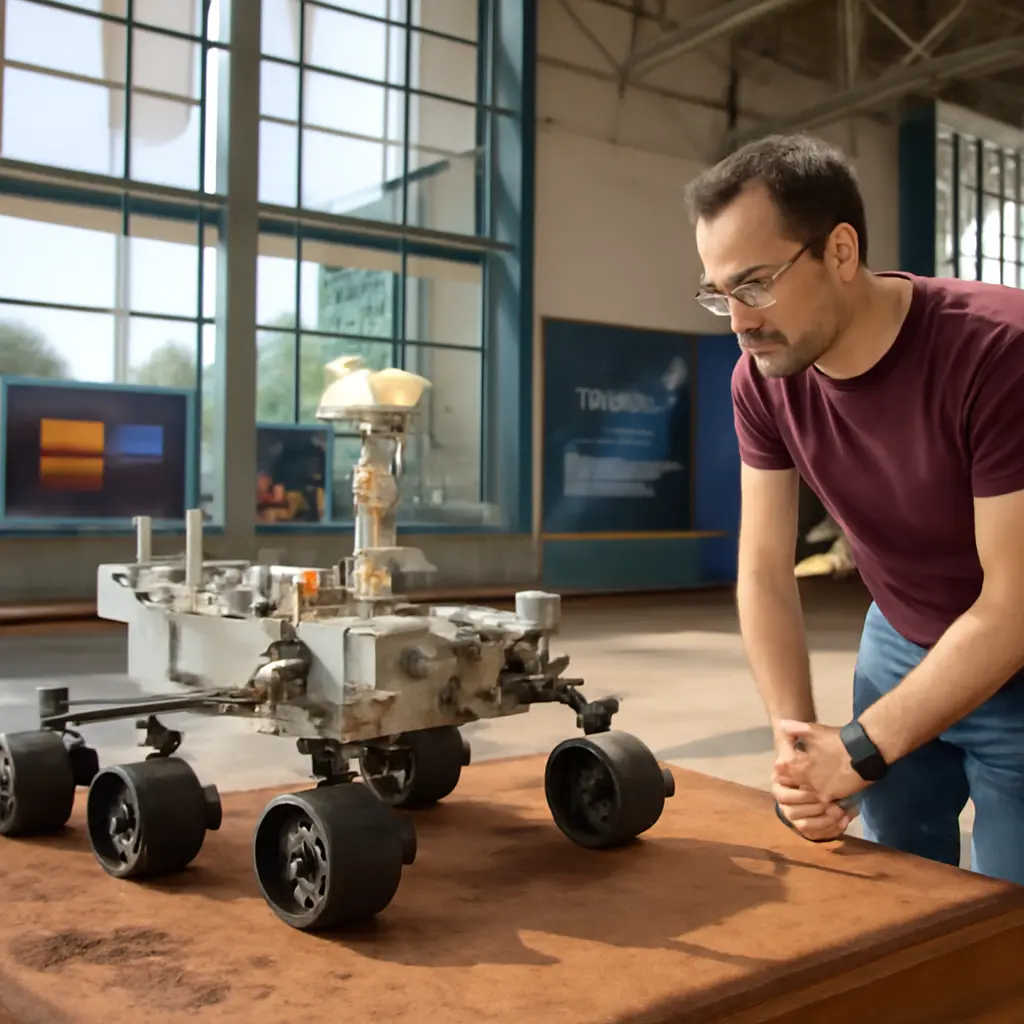
Space exploration is the investigation of space beyond Earth using spacecraft, instruments, and human crews. New technology is changing how that exploration works: reusable rockets can lower launch costs, autonomous systems help spacecraft operate far from Earth, and advanced telescopes and sensors reveal worlds that were once beyond reach. NASA reports that the James Webb Space Telescope’s primary mirror is 6.5 meters wide, while NASA’s Ingenuity helicopter completed 72 flights on Mars before its mission ended in 2024. Together, these developments show how launch systems, robotics, scientific instruments, and communications are expanding what missions can do—and how safely and efficiently they can do it.
How launch technology is changing space exploration
Launch technology comprises the rockets, engines, manufacturing methods, and operational systems used to carry payloads from Earth into space. NASA describes launch vehicles as systems that overcome Earth’s gravity and place spacecraft into a desired orbit or trajectory. New approaches focus on reusability, higher launch frequency, and delivering more capability per mission.
Reusable rockets and lower-cost access
A reusable rocket is designed to recover and fly some of its hardware again rather than discard it after one launch. SpaceX’s Falcon 9, for example, routinely lands and reuses its first-stage booster. Reuse does not make a launch cost-free: inspection, refurbishment, operations, and replacement components still matter. However, repeated use can reduce the need to build a new booster for every flight and supports more frequent launches.
This shift can make access to orbit more flexible for scientific satellites, commercial spacecraft, and crewed missions. The broader benefit is not simply cheaper launches, but a launch market able to serve more kinds of customers. The trade-off is that rockets remain complex systems requiring rigorous safety checks, especially when carrying people.
Small satellites and rideshare missions
Small satellites, including CubeSats, use standardized compact designs to conduct research, test technologies, or observe Earth. They can be launched in groups or as secondary payloads, sharing a rocket with a larger mission. NASA’s CubeSat Launch Initiative provides opportunities for educational institutions and other organizations to send small spacecraft into orbit.
Rideshare launches can lower the cost barrier, but they do not eliminate engineering challenges. Small spacecraft have limited power, communications capacity, and room for instruments, and their operators must coordinate with the primary payload’s orbit and schedule. Even so, miniaturized electronics allow some small satellites to perform useful science and technology demonstrations that once required much larger platforms.
How robotics and autonomy are changing space exploration
Space robotics includes remotely operated or autonomous machines that explore, inspect, collect data, or perform tasks beyond direct human reach. Autonomy means a spacecraft can make certain decisions and respond to conditions without waiting for instructions from Earth. This matters because radio signals take time to travel: NASA lists the one-way light time between Earth and Mars as roughly 3 to 22 minutes, depending on the planets’ positions.
Rovers and autonomous navigation
Rovers combine cameras, scientific instruments, mobility systems, and onboard software to study planetary surfaces. NASA’s Perseverance rover uses autonomous navigation capabilities to help select safe paths across Mars, while mission teams on Earth plan routes and analyze results. This combination of onboard decision-making and human oversight lets a rover make progress despite communication delays.
Perseverance also demonstrates how exploration technologies can serve multiple scientific goals. It studies Mars’ geology and past habitability, and it collects rock samples for a potential future return to Earth. The mission illustrates a wider trend: robots are increasingly designed as parts of a longer exploration sequence, not as isolated machines.
Aerial exploration on other worlds
NASA’s Ingenuity Mars Helicopter demonstrated powered, controlled flight in the thin atmosphere of another planet. Originally planned as a technology demonstration with five flights, Ingenuity completed 72 flights between April 2021 and January 2024. NASA reported that the helicopter’s mission ended after rotor damage prevented further flight.
The demonstration showed how aerial vehicles could scout routes, inspect terrain, or reach locations difficult for ground vehicles. Future designs would need to account for different atmospheric conditions, energy limits, and communication needs. Ingenuity’s success was a proof of concept, not evidence that helicopters can operate unchanged on every world.
How advanced instruments are changing space science
Space instruments detect and measure phenomena such as light, particles, magnetic fields, and planetary materials. Improvements in sensitivity, resolution, and data processing help scientists investigate objects that are faint, distant, or difficult to reach. Telescopes, spectrometers, radar systems, and compact sensors each provide different kinds of evidence.
Space telescopes and sharper observations
A space telescope observes from above much or all of Earth’s atmosphere, which can distort or block some wavelengths of light. NASA’s James Webb Space Telescope has a 6.5-meter primary mirror made of 18 segments. Its infrared instruments help researchers study early galaxies, star formation, and the atmospheres of some exoplanets.
Webb’s observations do not directly photograph every feature scientists want to understand. Researchers interpret measurements using models and compare multiple kinds of evidence. For example, atmospheric studies analyze how a planet’s observed spectrum changes as it passes in front of its star. This illustrates how better instruments expand scientific questions while still requiring careful analysis.
Miniaturized sensors and in-situ science
In-situ science means measuring a location directly rather than studying it only from a distance. Modern missions combine cameras with instruments that analyze rocks, gases, dust, or radiation on site. Smaller and more capable sensors can help spacecraft gather a wider range of measurements without carrying an entire laboratory.
NASA’s Mars rovers, for example, use instrument suites to examine the planet’s geology and environment. On other missions, sensors can monitor spacecraft health or measure conditions such as temperature and radiation. Miniaturization can save mass, but instruments still need calibration, protection from harsh environments, and enough power and data capacity to return useful results.
How communications and data systems are changing space exploration
Space communications systems transmit commands, telemetry, and scientific data between spacecraft and Earth. Their capabilities shape how much information missions can return and how quickly operators can respond. As missions travel farther and generate more data, networks must coordinate antennas, relay spacecraft, onboard storage, and increasingly sophisticated data processing.
Deep-space networks and relay satellites
NASA’s Deep Space Network uses large antenna complexes in California, Spain, and Australia to communicate with missions across the solar system. Their geographic spacing helps maintain contact as Earth rotates. Relay satellites can also pass information from spacecraft operating near or on a planetary surface to orbiters, which then transmit it toward Earth.
Communication capacity is limited by distance, antenna availability, spacecraft power, and the time needed to transmit data. Missions therefore prioritize what to send, compress files, and store information onboard until a connection is available. These constraints make efficient communications as important as the instruments collecting the data.
Artificial intelligence and onboard data handling
Artificial intelligence and machine-learning tools can help identify patterns, prioritize observations, or support navigation. Onboard processing is especially useful when a spacecraft cannot transmit every measurement to Earth or must act before a human operator can respond. These systems complement mission teams; they do not remove the need for validation, monitoring, and clear limits on autonomous actions.
As spacecraft become more capable, cybersecurity and software reliability also become mission concerns. A malfunction or compromised command system could disrupt operations, so agencies and mission operators use testing, safeguards, and controlled communications procedures. The promise of autonomy is greatest when paired with robust engineering and human accountability.
What these technologies mean for future exploration
The technologies reshaping space exploration are interconnected: reusable launch vehicles support more frequent access, robotics extend the reach of missions, advanced instruments improve observations, and communications systems return the resulting data. Their combined effect is visible in missions that explore Mars, observe distant galaxies, and test spacecraft systems for future journeys.
Challenges remain. Spacecraft must withstand radiation, extreme temperatures, and long periods without repair. Launches and satellite operations also require attention to orbital debris, planetary protection, environmental impacts, and equitable access to space. Progress depends not only on building more capable technology but on operating it responsibly.
Readers can follow mission updates from NASA, the European Space Agency, and other national space agencies, while comparing announcements with technical mission reports and peer-reviewed research. Understanding both the capabilities and limitations of new systems makes it easier to assess what a discovery actually shows—and what future exploration still needs to learn.
Conclusion
Reusable rockets and rideshare launches are broadening access to orbit; autonomous rovers and aerial vehicles are extending exploration beyond direct human control; advanced telescopes and compact sensors are revealing new evidence; and deep-space networks are moving data across immense distances. These changes make space exploration more capable, but they also bring engineering, safety, and stewardship responsibilities. Following credible mission sources and supporting careful scientific inquiry can help the public understand how today’s technologies shape humanity’s future beyond Earth.
Sources: NASA, Space Launch System and launch vehicle resources, https://www.nasa.gov/; SpaceX, Falcon 9, https://www.spacex.com/vehicles/falcon-9/; NASA, CubeSat Launch Initiative, https://www.nasa.gov/kennedy/launch-services-program/cubesat-launch-initiative/; NASA, Mars Perseverance Rover, https://science.nasa.gov/mission/mars-2020-perseverance/; NASA, Mars Helicopter Ingenuity, https://science.nasa.gov/mission/mars-2020-perseverance/technology/ingenuity-helicopter/; NASA, James Webb Space Telescope, https://science.nasa.gov/mission/webb/; NASA, Deep Space Network, https://www.nasa.gov/communicating-with-missions/dsn/; NASA, Mars in a Minute: How Long Is a Year on Mars?, https://mars.nasa.gov/resources/.


